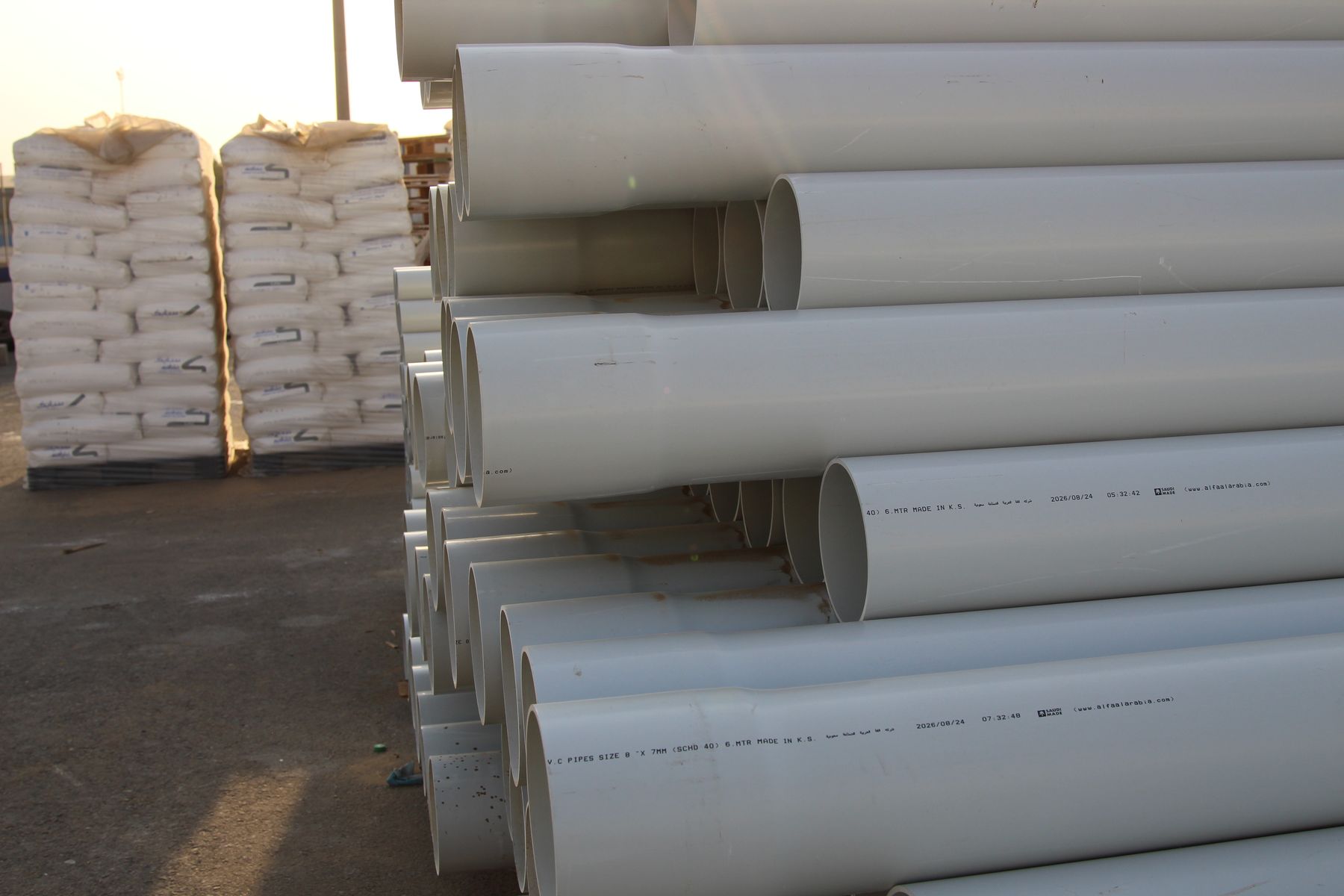
Precision-extruded unplasticized polyvinyl chloride pressure pipes manufactured in Jeddah for potable water distribution, irrigation trunk lines, and industrial utility networks. PN 6 to PN 16, 20 mm to 400 mm OD, conforming to DIN 8061/8062, ISO 4422, and SASO 14/15.
Direct pricing from the Jeddah plant, with technical submittal support.
Product photos from ALFA assets and supporting catalogue imagery for this family — for visual reference during specification and RFQ.
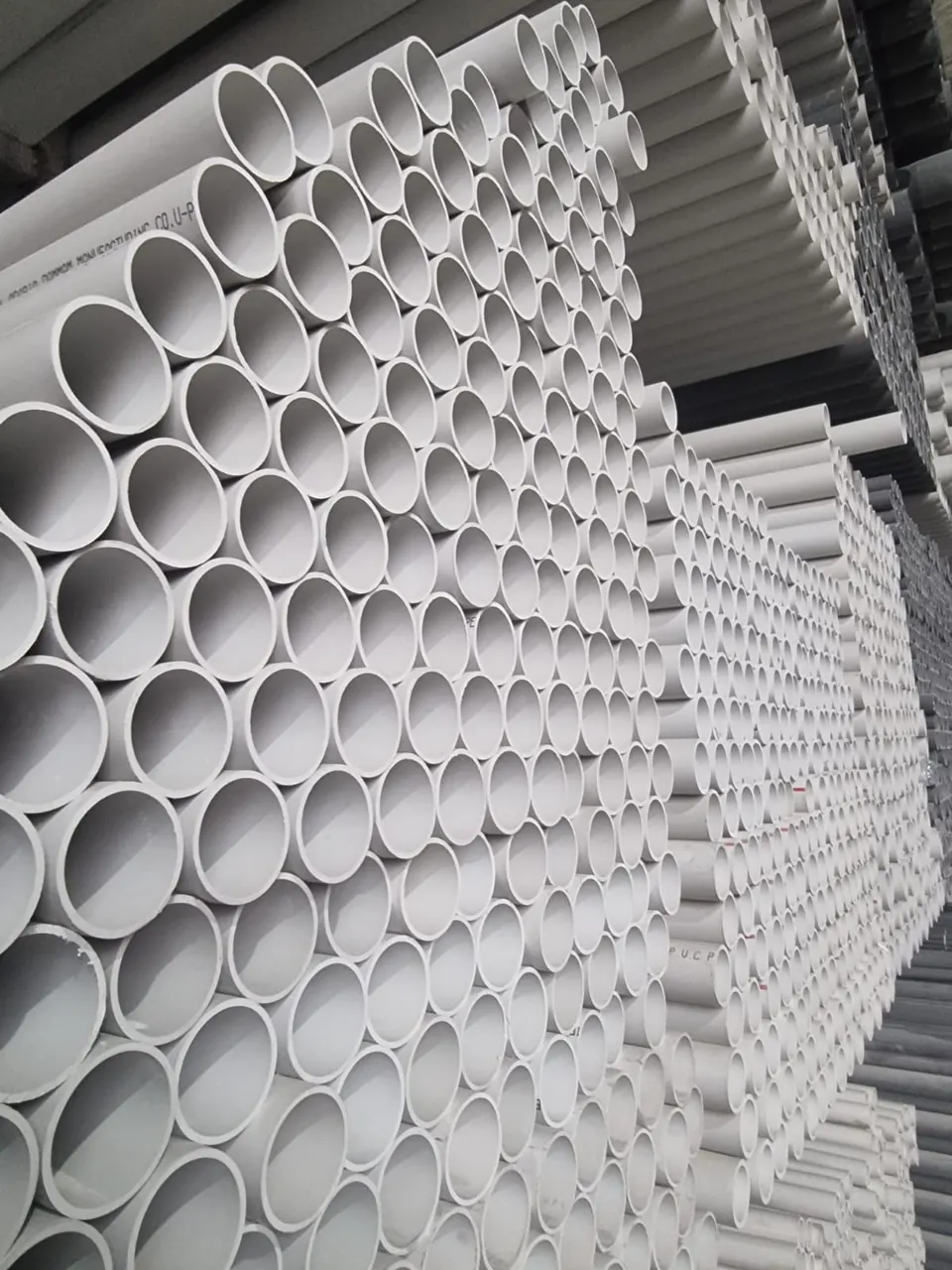
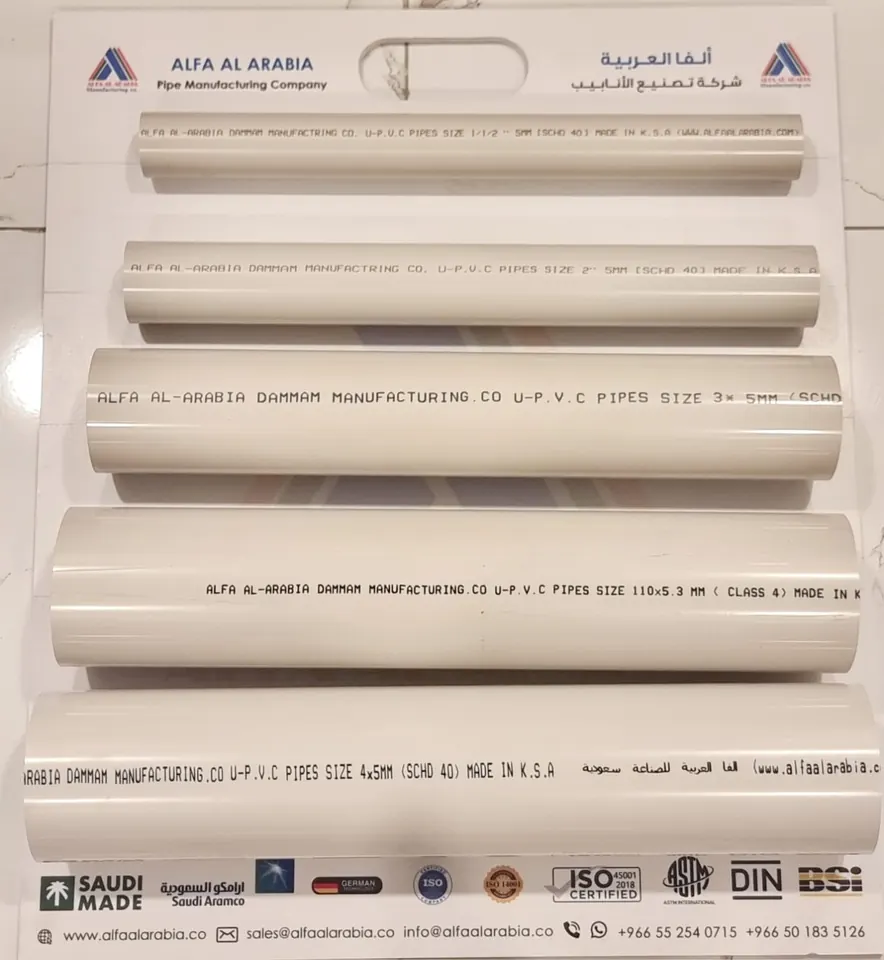
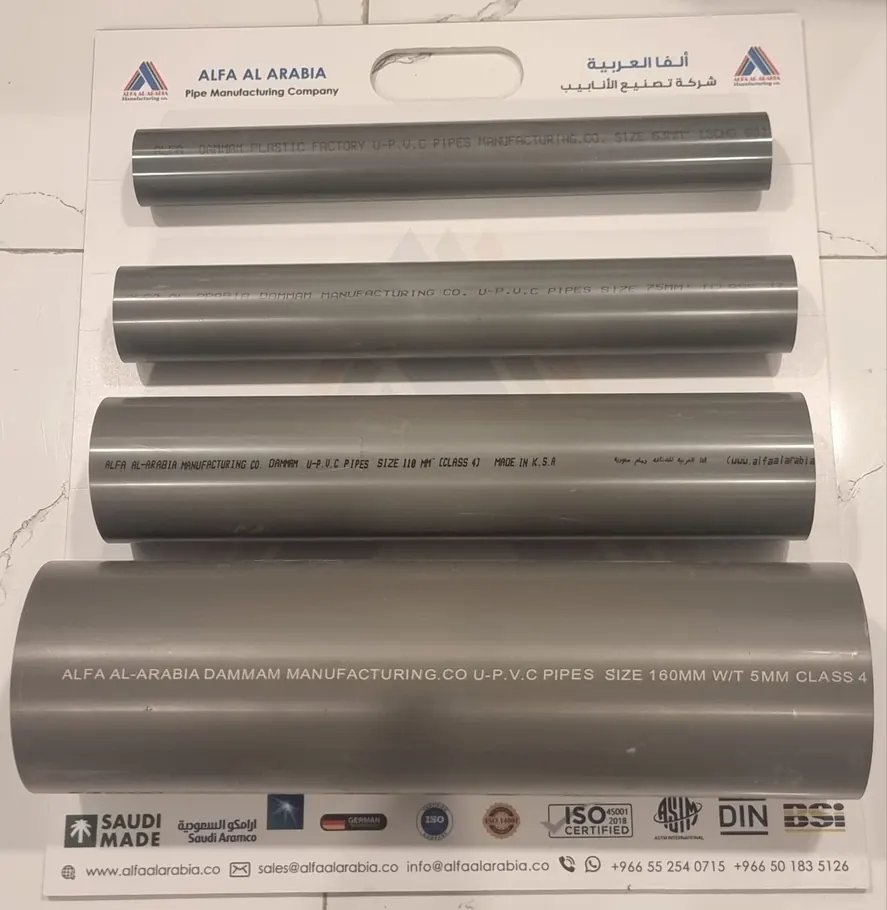
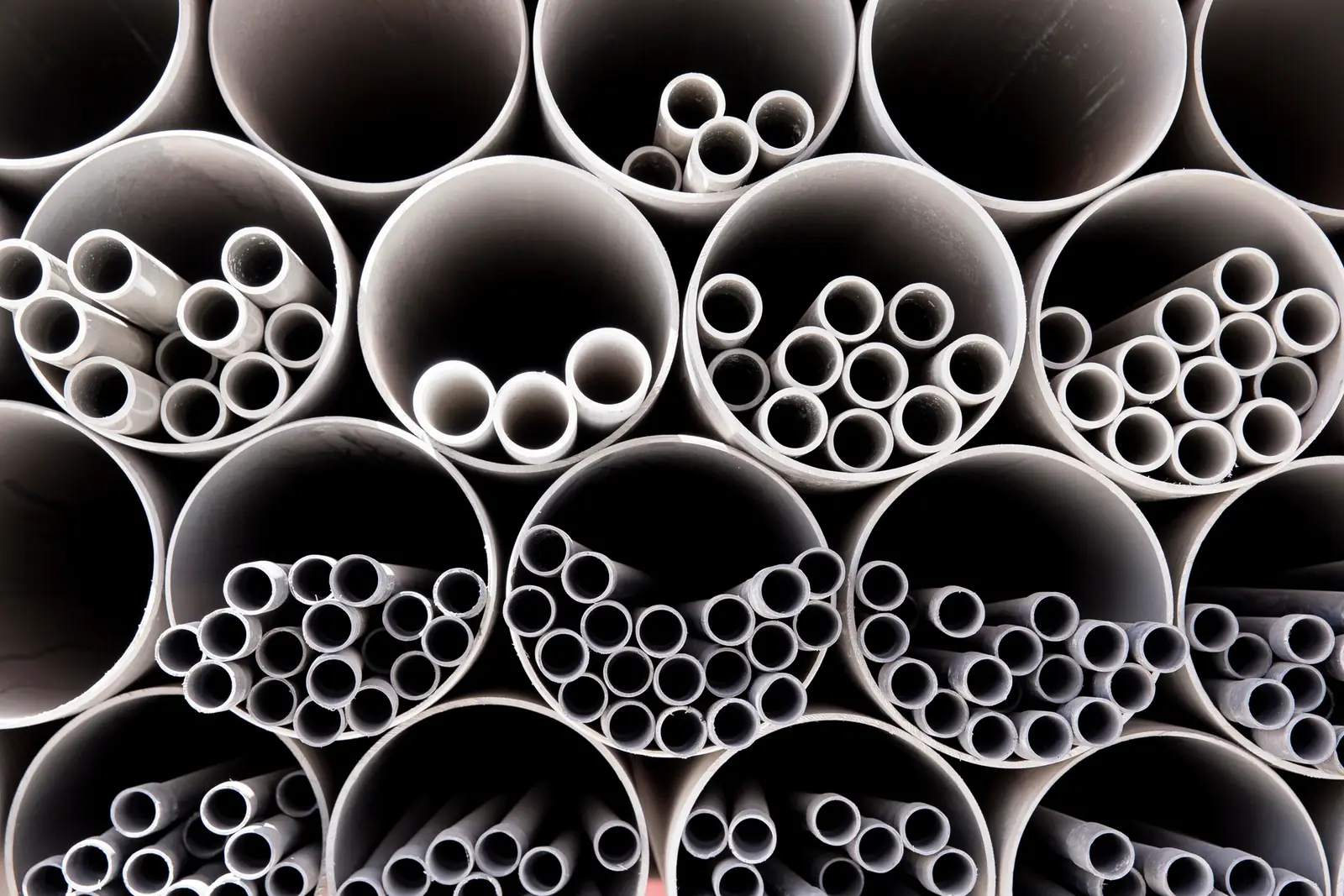
ALFA AL-ARABIA uPVC pressure pipes are rigid thermoplastic pipes manufactured from unplasticized polyvinyl chloride (PVC-U) compound stabilized with non-toxic calcium-zinc additives. Designed for continuous buried service carrying potable water, irrigation water, or industrial fluids at working pressures from 6 bar to 16 bar (PN 6 to PN 16) in ambient temperatures up to 25°C. Pipes are extruded at the 3rd Industrial City, Jeddah, KSA factory on high-capacity German/Taiwanese lines, batch-tested for burst pressure and impact resistance, and supplied in standard lengths of 5.8 m or 6.0 m with integral solvent-weld or rubber-ring sockets.
| Standard | DIN 8061/8062, ISO 4422, SASO 14/15 |
|---|---|
| Material | uPVC (PVC-U) — Lead-Free Ca-Zn Stabilizer |
| Pressure Classes | PN 6, PN 10, PN 16 (PN 25 on request) |
| Size Range | 20 mm to 400 mm OD |
| Jointing | Solvent Cement Socket & Rubber Ring Push-Fit |
| Color | Dark Grey (RAL 7011) |
| Standard Length | 5.8 m / 6.0 m |
| Aramco Vendor | #10116102 |
Unplasticized polyvinyl chloride (uPVC or PVC-U) is a rigid thermoplastic polymer produced by polymerizing vinyl chloride monomer (VCM) without the addition of plasticizers. The absence of plasticizers gives the material its characteristic rigidity, high tensile strength (approximately 50 MPa), and long-term resistance to creep under sustained hydrostatic pressure. Unlike flexible PVC used in cables or packaging, uPVC maintains dimensional stability over decades of buried service.
A uPVC pressure pipe compound typically consists of approximately 87–90% PVC resin, 3–5% calcium-zinc thermal stabilizer, 1–2% processing aids, 0.5–1% lubricants, and 2–5% impact modifier. ALFA AL-ARABIA uses exclusively calcium-zinc (Ca-Zn) stabilizers rather than lead-based alternatives. This is critically important for potable water applications, as it ensures the pipe does not leach heavy metals into drinking water over its 50-year design life.
DIN 8062 defines the dimensional requirements (outside diameters, wall thicknesses, and tolerances) for metric-series uPVC pressure pipes. DIN 8061 defines the general properties and testing requirements for the pipe material. Together, they establish a complete specification that is widely referenced across the Middle East, particularly in Saudi Arabia where SASO 14/15 standards are substantially based on DIN/ISO frameworks.
| Property | Value | Test Method |
|---|---|---|
| Density | 1.42 g/cm³ | ISO 1183 |
| Tensile Strength | ≥ 50 MPa | ISO 527 |
| Modulus of Elasticity | ≥ 3,000 MPa | ISO 527 |
| Vicat Softening Temperature | ≥ 79°C (BST) | ISO 306 |
| Charpy Impact (23°C) | ≥ 10 kJ/m² | ISO 179 |
| Water Absorption (24h) | ≤ 0.1 mg/cm² | ISO 62 |
| Thermal Conductivity | 0.16 W/m·K | DIN 52612 |
| Coefficient of Linear Expansion | 0.06–0.08 mm/m·°C | DIN 53752 |
| Hazen-Williams Coefficient (C) | 150 | — |
| Surface Roughness (Manning's n) | 0.009 | — |
| Stabilizer System | Non-Toxic Ca-Zn (Lead-Free) | ALFA QC |
The primary application for DIN 8062 metric-series uPVC pressure pipes is potable water distribution — the network of buried mains that delivers treated drinking water from treatment plants and reservoirs to residential, commercial, and industrial consumers. In Saudi Arabia, these networks are typically specified by the National Water Company (NWC), the Royal Commission for Jubail and Yanbu, and municipal authorities.
Beyond potable water, uPVC pressure pipes serve critical roles in agricultural irrigation (trunk mains feeding drip or sprinkler systems for date palm plantations, vegetable greenhouses, and open-field crops), industrial process water (cooling water circuits, demineralized water distribution, and utility loops in factories), and fire fighting mains (underground fire hydrant ring mains in residential compounds and industrial facilities).
In Saudi Arabia specifically, uPVC pressure pipes have a strong track record in:
The complete immunity of uPVC to electrochemical corrosion makes it particularly valuable in coastal sabkha soils (Jeddah, Dammam, Jubail, Yanbu) where metallic pipes suffer accelerated degradation.
| Nominal Size (mm) | Mean OD (mm) | PN 6 Wall (mm) | PN 10 Wall (mm) | PN 16 Wall (mm) | Weight PN 10 (kg/m) |
|---|---|---|---|---|---|
| 20 | 20.0 ± 0.2 | — | 1.5 | 1.9 | 0.14 |
| 25 | 25.0 ± 0.2 | — | 1.9 | 2.3 | 0.22 |
| 32 | 32.0 ± 0.2 | — | 2.4 | 2.9 | 0.34 |
| 40 | 40.0 ± 0.2 | — | 3.0 | 3.7 | 0.53 |
| 50 | 50.0 ± 0.2 | 2.4 | 3.7 | 4.6 | 0.81 |
| 63 | 63.0 ± 0.3 | 3.0 | 4.7 | 5.8 | 1.29 |
| 75 | 75.0 ± 0.3 | 3.6 | 5.6 | 6.9 | 1.82 |
| 90 | 90.0 ± 0.3 | 4.3 | 6.7 | 8.2 | 2.58 |
| 110 | 110.0 ± 0.4 | 5.3 | 8.1 | 10.0 | 3.84 |
| 140 | 140.0 ± 0.5 | 6.7 | 10.3 | 12.7 | 6.19 |
| 160 | 160.0 ± 0.6 | 7.7 | 11.8 | 14.6 | 8.08 |
| 200 | 200.0 ± 0.6 | 9.6 | 14.7 | 18.2 | 12.56 |
| 225 | 225.0 ± 0.7 | 10.8 | 16.6 | 20.5 | 15.90 |
| 250 | 250.0 ± 0.8 | 12.0 | 18.4 | — | 19.60 |
| 315 | 315.0 ± 1.0 | 15.0 | 23.2 | — | 30.60 |
| 400 | 400.0 ± 1.2 | 19.1 | — | — | — |
The nominal pressure (PN) rating of a uPVC pressure pipe is defined at a reference temperature of 20°C and represents the maximum allowable operating pressure (MAOP) for continuous service over a 50-year design life. At 20°C, PN 10 pipe safely carries 10 bar working pressure, PN 16 carries 16 bar, and so on.
However, the strength of PVC-U decreases with increasing temperature. In Saudi Arabia, where buried pipe temperatures can reach 30–35°C in shallow trenches during summer, a temperature derating factor must be applied. DIN 8062 specifies the following derating: at 25°C, multiply the PN rating by 0.93; at 30°C, multiply by 0.87; at 35°C, multiply by 0.80; at 40°C, multiply by 0.71. For example, a PN 16 pipe operating at 30°C has an effective working pressure of 16 × 0.87 = 13.9 bar.
For above-ground installations exposed to direct solar radiation, additional derating may be necessary. This is one reason why uPVC pressure pipes are predominantly used as buried piping in Saudi Arabia, where soil temperatures below 1 m depth rarely exceed 28–30°C even in summer.
uPVC is inherently resistant to a very wide range of chemicals commonly encountered in water and wastewater applications. It is completely immune to corrosion by acidic or alkaline soils, saline groundwater, sulfate-bearing sabkha soils, chlorinated drinking water (up to 5 ppm residual chlorine), and most dilute acids and alkalis.
Chemicals that are compatible with uPVC at ambient temperature include: sodium hypochlorite (up to 12.5% for water treatment), sulfuric acid (up to 50%), hydrochloric acid (up to 35%), sodium hydroxide (up to 50%), and most salts and mineral solutions. uPVC is not compatible with certain organic solvents (ketones, esters, aromatic hydrocarbons), concentrated oxidizing acids, or sustained exposure to temperatures above 60°C.
For industrial chemical service at elevated temperatures, ALFA AL-ARABIA recommends CPVC (chlorinated PVC) pipe per ASTM F441, which maintains chemical resistance up to 93°C.
One of the primary engineering advantages of uPVC piping over metallic alternatives is its superior hydraulic smoothness. The Hazen-Williams coefficient (C) for uPVC is 150, compared to approximately 130 for new ductile iron, 120 for aged ductile iron, and 100 for cast iron. This means that, for a given pipe diameter and flow rate, the friction head loss in uPVC pipe is approximately 30% lower than in new ductile iron and 50% lower than in aged cast iron.
In practical terms, this hydraulic advantage allows designers to either: (a) use a smaller pipe diameter for the same flow capacity, reducing material cost; or (b) achieve lower system head loss and reduce pumping energy costs over the life of the system. For gravity-fed water distribution systems, the lower friction loss translates directly to better pressure at downstream consumers.
Unlike metallic pipes, the C value of uPVC does not degrade over time. There is no internal scale buildup, tuberculation, or biofilm adhesion that reduces the effective bore diameter. The internal surface remains smooth throughout the entire 50-year design life, maintaining the original hydraulic capacity.
Solvent Cement Welding: The most common jointing method for uPVC pressure pipes up to 160 mm diameter. A heavy-bodied solvent cement (conforming to ASTM D2564 or equivalent) chemically dissolves the PVC surface layer, creating a molecular fusion between the socket and spigot. When properly executed, the joint is as strong as the pipe wall itself. A compatible primer must be applied first to clean and pre-soften the joint surfaces. The joint achieves handling strength in approximately 15 minutes and full pressure-test strength in 24 hours at 20°C.
Rubber Ring Push-Fit (Elastomeric Seal): For larger diameters (typically 63 mm and above) and applications requiring speed or future disassembly, the rubber-ring push-fit joint uses an EPDM elastomeric gasket seated in a precision-molded groove inside the socket. The spigot is chamfered and lubricated, then pushed into the socket until it seats against a stop ring. This joint allows limited angular deflection (up to 3° for large diameters) and accommodates thermal expansion. Thrust blocks or restrained joints are required at directional changes to resist unbalanced hydrostatic thrust.
These guidelines are specific to Saudi Arabian installation conditions, including high ambient temperatures, sabkha soil, and the logistical requirements of desert construction sites.
| Test | Standard | Frequency | Acceptance Criteria |
|---|---|---|---|
| Hydrostatic Burst | ISO 1167 | Every production batch | ≥ 4.2× working pressure at 20°C for 1 hour |
| Impact Resistance (Drop Weight) | ISO 3127 | Every production batch | TIR ≤ 10% |
| Vicat Softening Temperature | ISO 306 | Per raw material lot | ≥ 79°C (BST) |
| Dimensional Inspection (OD, Wall) | DIN 8062 | Continuous (every pipe) | Within tolerance Table 1 |
| Acetone Reversion | ISO 9852 | Per raw material lot | Change in length ≤ 5% |
| Density Check | ISO 1183 | Per compound batch | 1.38–1.46 g/cm³ |
| Color & Surface Inspection | Visual | 100% of production | No cracks, voids, discoloration |
DIN 8062 uses metric sizing (20 mm to 400 mm OD) and pressure class notation (PN 6 to PN 25), while ASTM D1785 uses Imperial IPS sizing (1/2" to 12") and schedule notation (Schedule 40 and Schedule 80). DIN 8062 is the preferred specification for Saudi municipal and NWC projects; ASTM D1785 is commonly specified for Saudi Aramco industrial projects.
PN 10 (10 bar working pressure at 20°C) is suitable for most water distribution networks where static + residual pressure does not exceed 10 bar. PN 16 is specified where system pressures exceed 10 bar, near pump stations, in high-rise building supply mains, or where pressure surges (water hammer) are expected. Always apply temperature derating for Saudi conditions.
SDR (Standard Dimension Ratio) = outside diameter ÷ wall thickness. Lower SDR = thicker wall = higher pressure rating. For uPVC: PN 6 = SDR 41, PN 10 = SDR 21, PN 16 = SDR 13.6. The SDR concept allows engineers to calculate wall thickness for any diameter once the pressure class is known.
uPVC pressure pipes are rated at 20°C. At 25°C, multiply by 0.93; at 30°C by 0.87; at 35°C by 0.80; at 40°C by 0.71. In Saudi Arabia, buried pipes at 1.0 m depth typically experience 25–30°C, requiring a 7–13% derating. This means a PN 10 pipe at 30°C has an effective rating of 8.7 bar.
ALFA manufactures DIN 8062 metric uPVC pressure pipes from 20 mm to 400 mm outside diameter. Standard length is 5.8 m or 6.0 m. Pressure classes PN 6, PN 10, and PN 16 are standard stock items; PN 25 is available on request for specific project orders.
For diameters up to 63 mm, solvent cement welding is recommended for its permanent, leak-proof seal. For diameters 63 mm and above, rubber-ring push-fit joints offer faster installation and the ability to accommodate thermal movement. Both methods are fully tested and compliant with DIN requirements.
Store pipes on flat timber bearers, maximum stack height 1.5 m. Protect from direct sunlight with tarpaulin or shade cloth — prolonged UV exposure degrades the surface. Keep rubber rings in their factory packaging until installation. Fittings should be stored in covered containers.
Include: pipe standard (DIN 8062), pressure class (PN), diameters required, quantities per diameter, jointing method (solvent or rubber-ring), project name and location, delivery address, required delivery date, and any special requirements (marking, bundling, third-party inspection).
Yes. ALFA AL-ARABIA holds Saudi Aramco vendor approval under Vendor Code #10116102 for non-metallic piping materials. This approval is maintained through regular quality audits and product testing.
The design life is 50 years minimum when installed and operated within the temperature and pressure limits specified by DIN 8062. This is based on long-term hydrostatic strength (LTHS) regression testing per ISO 9080. Many uPVC water mains installed in Europe in the 1960s are still in service today after 60+ years.
Contact our Jeddah engineering desk for instant project-specific pricing, technical submittals, and Material Approval Request (MAR) support.
Use these resources for design methodology and submittals. Confirm ALFA sizes, ratings, and availability for your project.
uPVC Pressure Pipe DIN 8062 · Standard context: DIN 8062. Documentation listed below is fulfilled on request through ALFA’s technical desk.