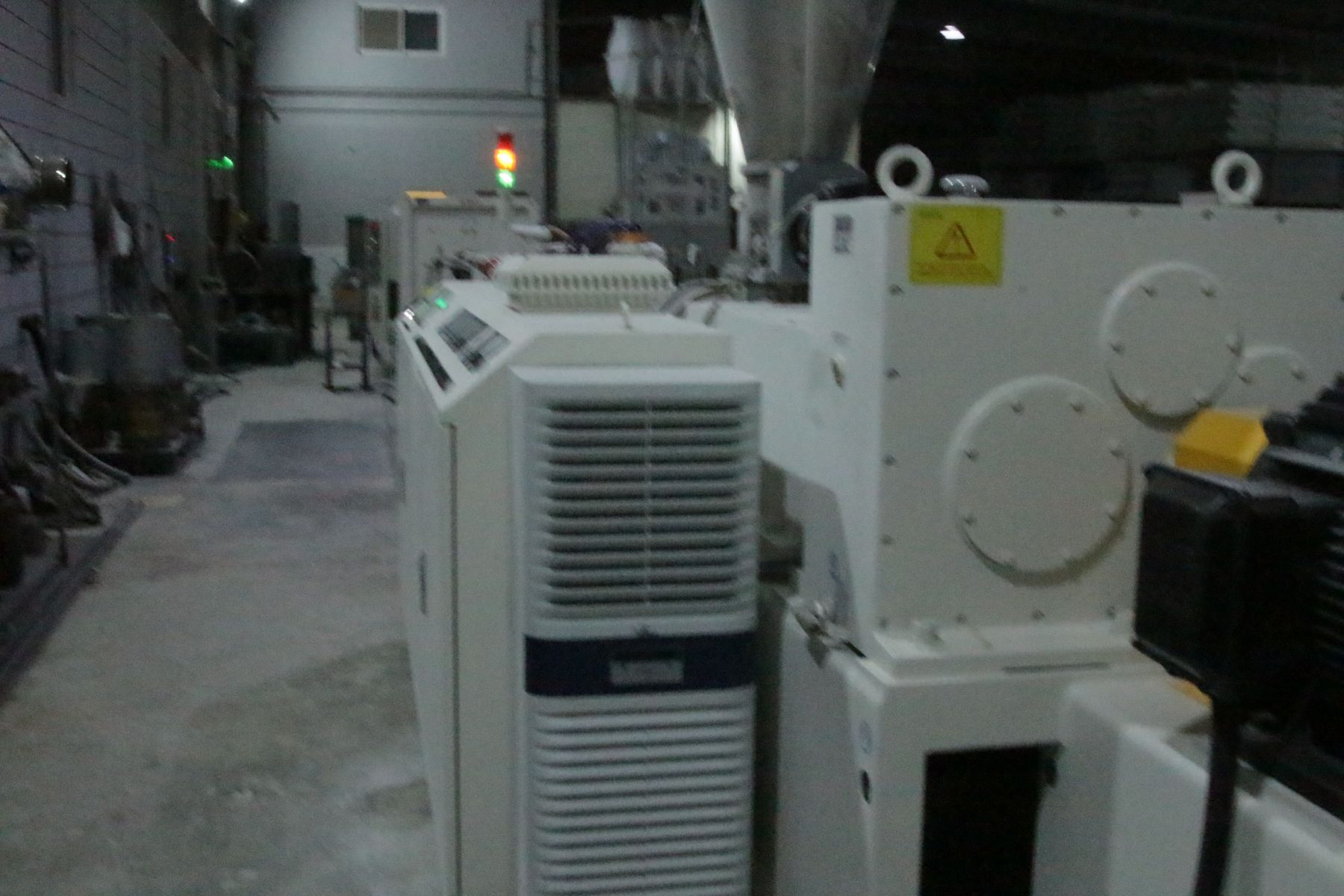
Chlorinated polyvinyl chloride piping for continuous service up to 93°C (200°F). Hot water distribution, industrial chemical process lines, and high-temperature utility systems. Schedule 40 & 80, 1/2" to 6" NPS.
Direct pricing from the Jeddah plant, with technical submittal support.
Product photos from ALFA assets and supporting catalogue imagery for this family — for visual reference during specification and RFQ.
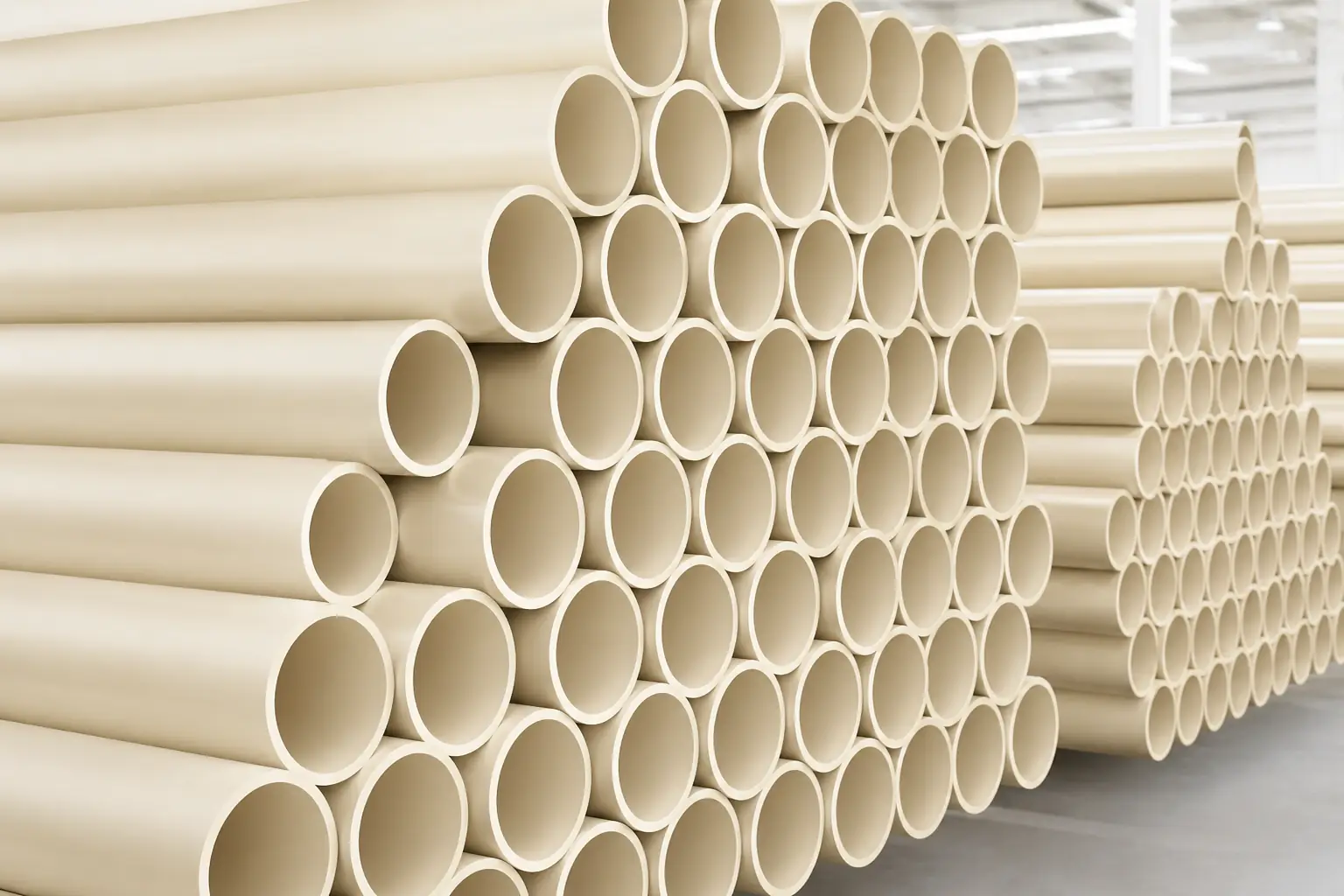
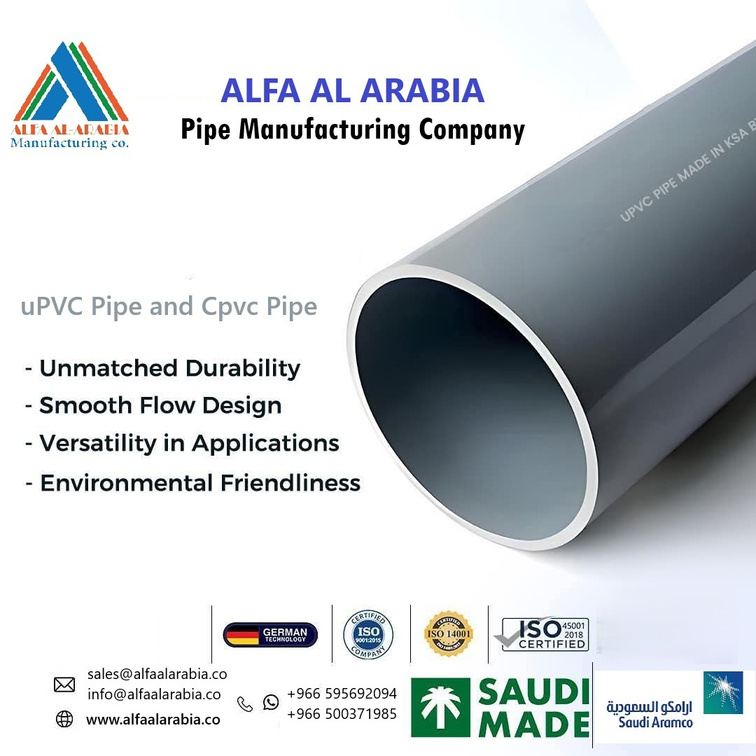
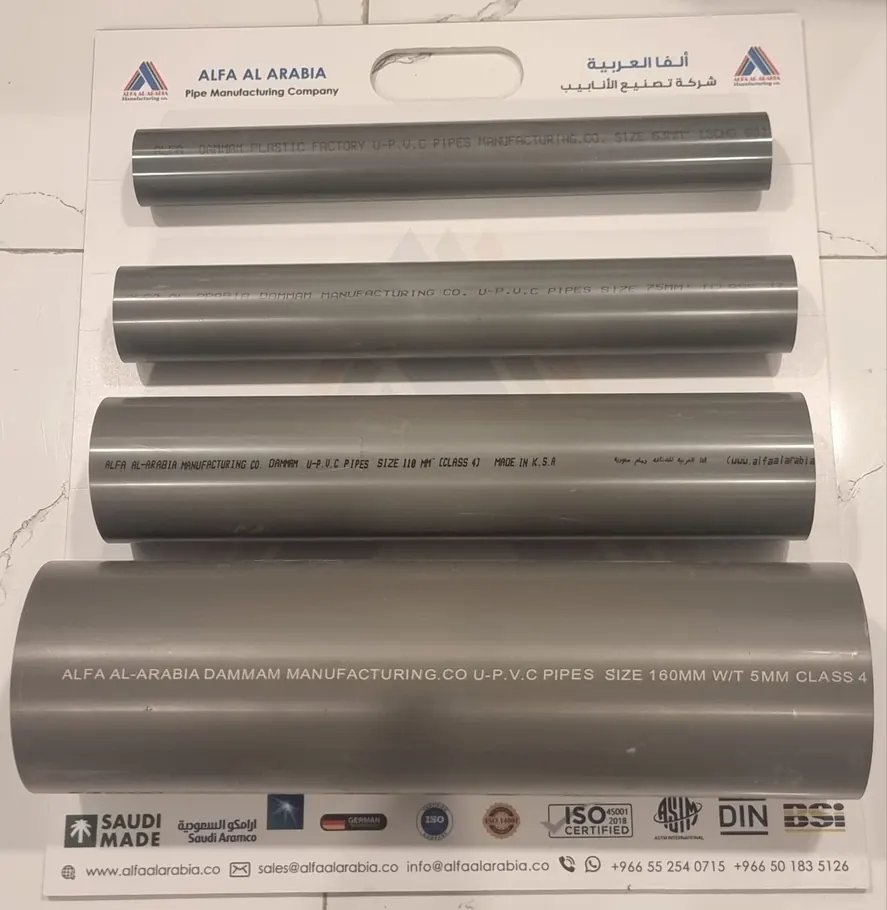
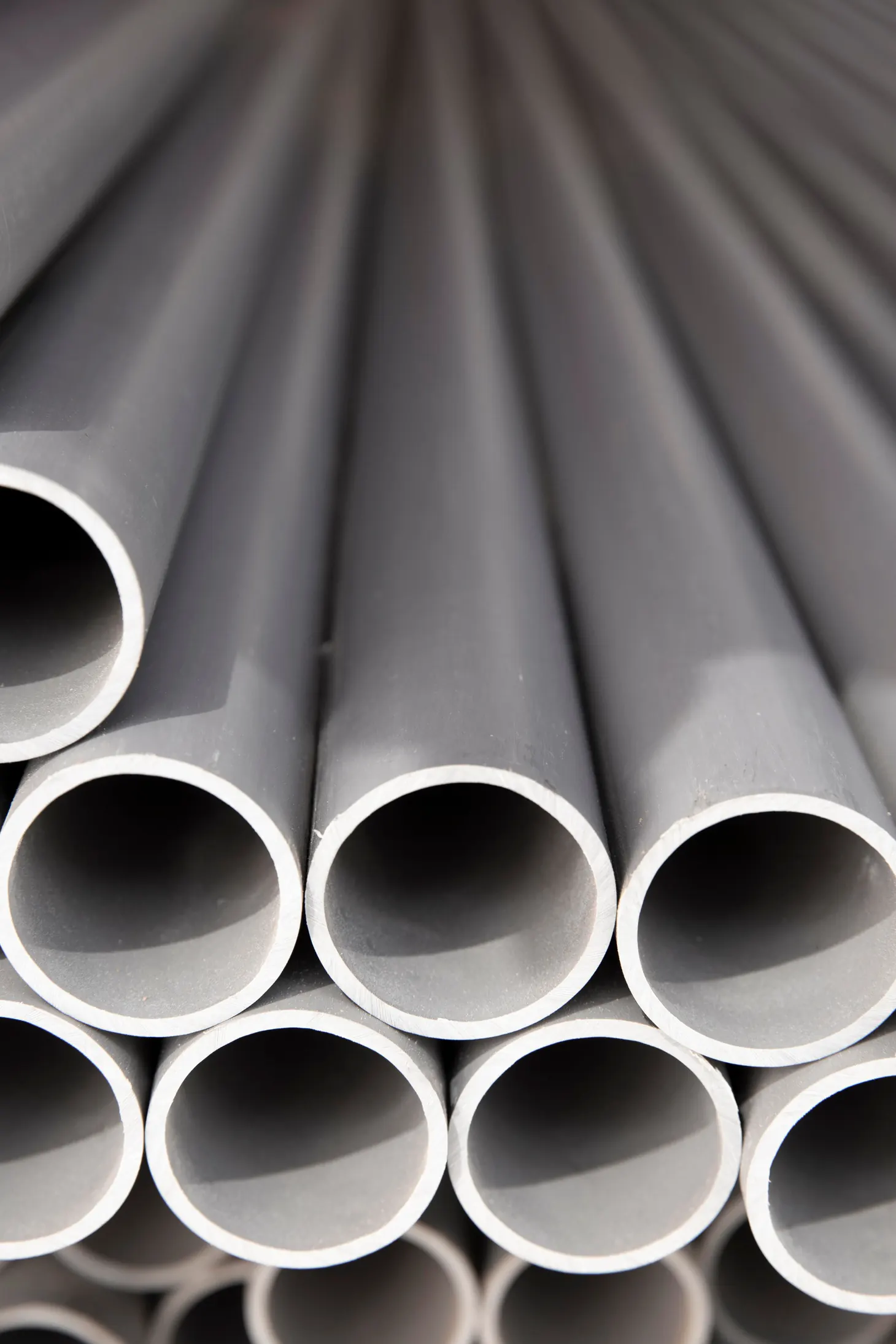
CPVC (chlorinated polyvinyl chloride) is a thermoplastic pipe material created by post-chlorinating PVC resin, raising the chlorine content from approximately 57% to 63-69%. This additional chlorination significantly increases the heat distortion temperature, allowing CPVC to operate continuously at temperatures up to 93°C (200°F) — a critical capability that standard uPVC cannot match. ALFA AL-ARABIA manufactures CPVC pipe per ASTM F441 for hot water plumbing, industrial chemical loops, and process piping where temperatures exceed 60°C.
| Standard | ASTM F441, ASTM F442, CTS (Copper Tube Size) |
|---|---|
| Material | CPVC — Chlorinated PVC (63-69% Cl content) |
| Max Service Temperature | 93°C (200°F) |
| Size Range | 1/2" to 6" NPS (Schedule 40 & 80) |
| Jointing | Solvent Cement (ASTM F493) & Flanged |
| Color | Light Grey / Cream (CPVC standard) |
| Aramco Vendor | #10116102 |
CPVC (Chlorinated Polyvinyl Chloride) is produced by subjecting standard PVC resin to a post-chlorination process, typically using a free-radical chlorination reaction. This process increases the chlorine content of the polymer from approximately 57% (standard PVC) to 63-69% (CPVC). The additional chlorine atoms disrupt the regularity of the polymer chain, raising the glass transition temperature (Tg) from approximately 80°C to 115°C. This is what allows CPVC pipe to maintain structural integrity and pressure capacity at temperatures where standard uPVC would soften and fail.
The practical implication for engineers and contractors is straightforward: uPVC is limited to a maximum continuous service temperature of 60°C, while CPVC can operate continuously at up to 93°C (200°F). This makes CPVC the material of choice for hot water distribution, heating system return lines, and industrial process piping carrying fluids at elevated temperatures.
CPVC also offers broader chemical resistance than uPVC at elevated temperatures. It can handle strong mineral acids, bases, and salt solutions at temperatures where uPVC would soften. However, CPVC has essentially the same limitations as uPVC regarding certain organic solvents — ketones, esters, and aromatic hydrocarbons can attack CPVC pipe.
| Property | CPVC | uPVC | Test Method |
|---|---|---|---|
| Chlorine Content | 63–69% | ~57% | ASTM D4216 |
| Max. Service Temperature | 93°C (200°F) | 60°C (140°F) | — |
| Vicat Softening Point | ≥110°C | ≥79°C | ASTM D1525 |
| Tensile Strength (23°C) | 55 MPa | 50 MPa | ASTM D638 |
| Modulus of Elasticity | 2,900 MPa | 3,000 MPa | ASTM D638 |
| Density | 1.55 g/cm³ | 1.42 g/cm³ | ASTM D792 |
| Hazen-Williams C | 150 | 150 | — |
| Coefficient of Expansion | 0.063 mm/m/°C | 0.06 mm/m/°C | ASTM D696 |
| Cell Classification | 23447 | 12454 | ASTM D1784 |
Hot Water Distribution: CPVC is the standard thermoplastic pipe material for domestic and commercial hot water plumbing. In Saudi Arabia, where solar-heated rooftop tanks can reach 70–80°C in summer, CPVC provides a safe margin that uPVC cannot. Hotels, hospitals, residential compounds, and commercial buildings throughout the Kingdom specify CPVC for hot water risers and distribution loops.
Industrial Chemical Service: CPVC's combination of high temperature capability and chemical resistance makes it suitable for industrial piping in chemical plants, pharmaceutical facilities, water treatment plants, and food processing operations. Common media include: hot demineralized water, dilute acids (sulfuric, hydrochloric), sodium hydroxide solutions, sodium hypochlorite, and brine.
HVAC Chilled and Heating Water: In commercial HVAC systems, CPVC can serve as an alternative to copper or steel for chilled water and heating hot water piping. Its corrosion immunity eliminates the need for chemical water treatment programs that are required with metallic piping.
Fire Sprinkler Systems: CPVC pipe with UL/FM listing is used in residential and light commercial fire sprinkler systems. The pipe's smooth bore (C=150) reduces friction loss compared to steel, allowing smaller pipe sizes.
| Temperature | °F | Schedule 40 WP (psi) | Schedule 80 WP (psi) | Derating Factor |
|---|---|---|---|---|
| 23°C | 73°F | 100% | 100% | 1.00 |
| 38°C | 100°F | — | — | 0.78 |
| 49°C | 120°F | — | — | 0.63 |
| 60°C | 140°F | — | — | 0.50 |
| 71°C | 160°F | — | — | 0.40 |
| 82°C | 180°F | — | — | 0.25 |
| 93°C | 200°F | — | — | 0.20 |
CPVC requires its own dedicated solvent cement — ASTM F493 CPVC cement. Do not use PVC solvent cement on CPVC pipe — PVC cement does not have the correct solvent composition to properly soften and fuse CPVC material. Using PVC cement on CPVC will result in weak joints that can fail under pressure.
Thermal expansion is a critical design consideration for CPVC hot water systems. At 0.063 mm/m/°C, a 10-meter run of CPVC pipe experiencing a 50°C temperature rise (from 20°C ambient to 70°C hot water) will expand approximately 31.5 mm. Expansion loops, offsets, or mechanical expansion joints must be designed into the system to prevent excessive stress on fittings.
In Saudi Arabia, where ambient temperatures in mechanical rooms can reach 45°C or higher, the derating factor at operating temperature must be carefully calculated. A CPVC pipe carrying 80°C hot water in a 45°C ambient has an effective operating temperature of 80°C, requiring a derating factor of approximately 0.30.
Support spacing for CPVC is temperature-dependent. At 23°C, support every 1.2 m for horizontal runs. At 82°C, reduce support spacing to 0.6 m. Inadequate support at elevated temperature will cause sagging and stress concentrations at fittings.
No. uPVC has a maximum continuous service temperature of 60°C and a Vicat softening point of 79°C. Hot water systems in Saudi Arabia routinely reach 70-80°C in summer. Using uPVC for hot water will result in pipe softening, deformation, and eventual failure. CPVC (Vicat ≥110°C) is the only thermoplastic option for hot water up to 93°C.
Absolutely not. PVC cement and CPVC cement use different solvents. PVC cement (per ASTM D2564) will not properly soften CPVC resin, resulting in a weak joint that may fail under pressure. Always use CPVC-specific solvent cement per ASTM F493. The cements are usually color-coded: PVC cement is clear or grey, CPVC cement is typically orange or yellow.
93°C (200°F) continuous service. At 93°C, the working pressure is approximately 20% of the rated room-temperature pressure. CPVC should not be used above 93°C under any circumstances. For temperatures above 93°C, use metallic piping (stainless steel, carbon steel, or copper).
CPVC is widely used in Saudi Arabian hotels, hospitals, residential compounds, and commercial buildings for hot water distribution. It is also used in industrial chemical piping, HVAC systems, and water treatment plant process piping. The combination of high temperature capability and corrosion immunity makes it particularly valuable in the Saudi climate.
ALFA manufactures CPVC pipe from 1/2" to 6" NPS in both Schedule 40 and Schedule 80 per ASTM F441. CTS (Copper Tube Size) for plumbing applications is also available in common sizes.
CPVC expands at approximately 0.063 mm/m/°C. A hot water system experiencing a 50°C temperature rise will see approximately 3.15 mm of expansion per meter of straight pipe run. Expansion loops, offsets, or bellows-type expansion joints must be incorporated to prevent fitting stress. A general rule is to provide an expansion loop every 10-15 meters of straight run.
Contact our Jeddah engineering desk for instant project-specific pricing, technical submittals, and Material Approval Request (MAR) support.
Use these resources for design methodology and submittals. Confirm ALFA sizes, ratings, and availability for your project.
CPVC Pipe ASTM F441 · Standard context: ASTM F441. Documentation listed below is fulfilled on request through ALFA’s technical desk.