
Perforated and slotted uPVC pipes for subsurface drainage, dewatering, agricultural land drainage, sports field drainage, and retaining wall weepholes. 50 mm to 200 mm OD.
Direct pricing from the Jeddah plant, with technical submittal support.
Product photos from ALFA assets and supporting catalogue imagery for this family — for visual reference during specification and RFQ.
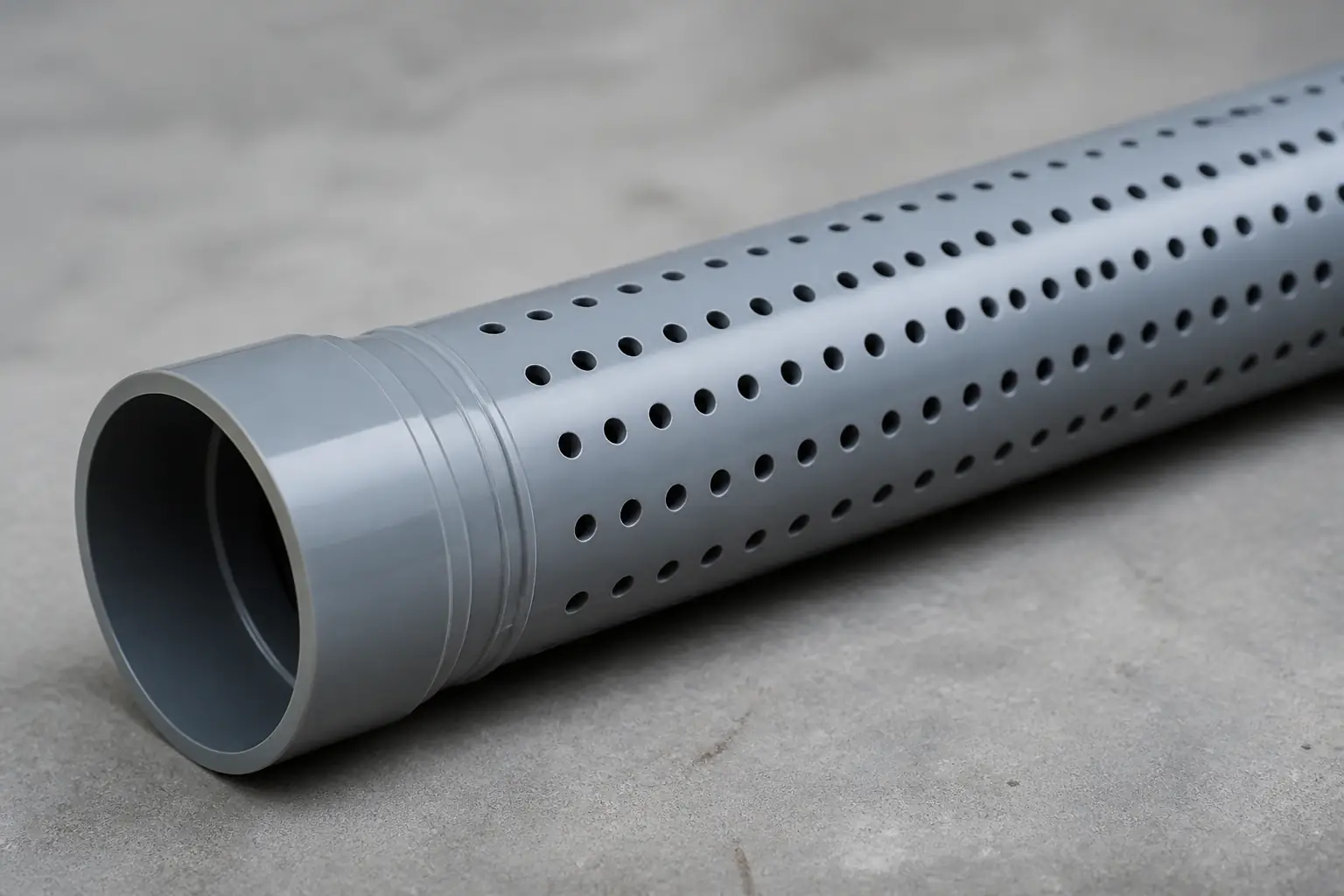
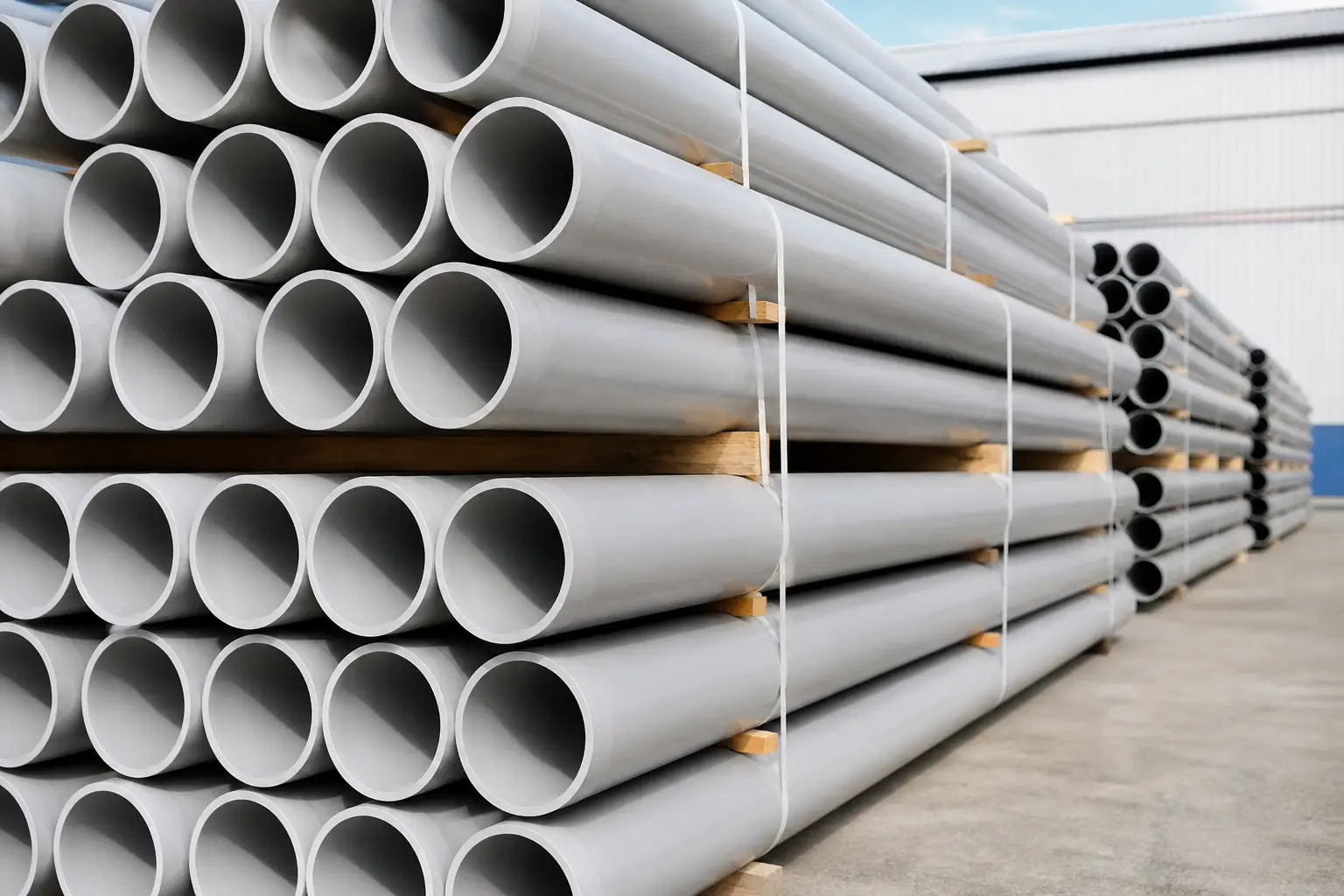
ALFA AL-ARABIA perforated drainage pipes are uPVC pipes with factory-cut slots or perforations that allow groundwater to enter the pipe while filtering out soil particles. These pipes are used to lower water tables, drain waterlogged land, dewater excavations, and provide foundation drainage to prevent hydrostatic pressure buildup against basement walls and retaining structures.
| Standard | DIN 1187, EN 1401 (modified) |
|---|---|
| Material | uPVC (PVC-U) — Solid Wall, Perforated |
| Size Range | 50 mm, 80 mm, 100 mm, 110 mm, 160 mm, 200 mm |
| Perforation Pattern | Factory-cut slots, typically 1.5–3.0 mm width |
| Jointing | Push-fit or spigot-and-socket |
| Color | Dark Grey / Green |
| Wrap Options | Available with geotextile filter sock wrapping |
A perforated drainage pipe works by intercepting groundwater flowing through the soil and channeling it into the pipe through the perforations. The pipe is installed in a gravel-filled trench below the water table or at the level where drainage is required. Groundwater seeps through the gravel, enters the pipe through the perforations, and flows by gravity along the pipe to a discharge point (sump, manhole, or open drain).
The perforation design is critical. The slots must be large enough to allow water to enter freely without excessive head loss, but small enough to prevent soil particles from entering and clogging the pipe. Typical slot widths are 1.5–3.0 mm. For fine-grained soils (silt, clay), a geotextile filter fabric wrap around the pipe provides additional filtration to prevent soil migration.
In Saudi Arabia, perforated drainage pipes serve critical functions in: foundation drainage for buildings in areas with high water tables (coastal Jeddah, Dammam); retaining wall drainage to relieve hydrostatic pressure; agricultural land drainage for farms in irrigated areas; sports field and landscape subsurface drainage; and construction dewatering during excavation.
| Size | OD (mm) | Wall (mm) | Slot Width (mm) | Open Area (%) | Flow Capacity* (L/s) |
|---|---|---|---|---|---|
| DN 50 | 50 | 1.8 | 1.5 | ~15 | 0.8 |
| DN 80 | 80 | 1.8 | 1.5 | ~15 | 2.5 |
| DN 100 | 100 | 2.0 | 2.0 | ~18 | 4.5 |
| DN 110 | 110 | 2.2 | 2.0 | ~18 | 5.5 |
| DN 160 | 160 | 3.0 | 2.5 | ~20 | 12.0 |
| DN 200 | 200 | 3.5 | 3.0 | ~22 | 22.0 |
Proper installation is critical for long-term drainage performance. Incorrect installation is the leading cause of drainage system failure.
For groundwater interception (lowering water tables, foundation drainage), perforations should face DOWN so groundwater rises into the pipe from below. For infiltration drainage (sports fields, landscape drainage where surface water percolates down), perforations face UP to collect water draining from above.
Use a geotextile-wrapped pipe in fine-grained soils (silt, fine sand, clay) where soil particles can migrate through the gravel surround and enter the perforations. In coarse sand or gravel soils, a geotextile wrap is generally not needed. If in doubt, use the wrap.
Clean, washed gravel in the 10–20 mm size range is standard. The gravel must be free of fines (no sand, silt, or clay) because fines will clog the drainage path over time. Do not use crushed limestone in areas where it may dissolve in slightly acidic groundwater.
Yes. The perforated pipe is used in the drainage zone, then transitions to solid (non-perforated) pipe for the transport section that carries collected water to the discharge point. Use standard push-fit or solvent-cemented couplings to connect.
Minimum 0.5% (1:200) gradient toward the discharge point. Steeper is better — 1.0% (1:100) is recommended where excavation depth permits. Flat or negative slopes will cause water to pool in the pipe and reduce drainage effectiveness.
Contact our Jeddah engineering desk for instant project-specific pricing, technical submittals, and Material Approval Request (MAR) support.
Use these resources for design methodology and submittals. Confirm ALFA sizes, ratings, and availability for your project.
PVC Perforated Drainage Pipe · Standard context: Project / DIN 1187 context. Documentation listed below is fulfilled on request through ALFA’s technical desk.